Quick Editorial Answer · Winter in Chail at a Glance
Yes, it does snow in Chail, but snowfall is episodic rather than continuous. Situated at 2,250 metres (7,380 feet) in Solan district, Chail receives snowfall primarily between late December and mid-February. January is historically the coldest month and brings the most favorable window for snowfall in Chail, coinciding with active Western Disturbances across the northwest Himalayas. Early December is mostly sunny and dry, while February features late winter spells followed by rapid daytime thawing. Even without snow, Chail in winter offers clear skies, quiet pine trails, radiant sunshine, and expansive Himalayan panoramas.
Every winter, travellers wonder whether they will encounter fresh snowfall in Chail. Located 45 kilometres beyond Shimla at 2,250 metres, Chail offers silent deodar glades, crisp alpine air, and expansive Himalayan views.
This Chail winter travel guide provides meteorological patterns, road safety advice, and practical guidance for exploring this quiet hill station.
Table of Contents
- Does It Snow in Chail? The Meteorological Reality of a 2,250-Metre Ridge
- Best Time to Visit Chail for Snowfall: Month-by-Month Breakdown
- What Does Chail Look Like in Winter?
- Places to Explore During a Winter Visit
- Is the Road to Chail Safe During Snowfall?
- What Should You Pack for Chail in Winter?
- Where Should You Stay in Chail During Winter?
- Is Chail Worth Visiting If There Is No Snow?
- Frequently Asked Questions About Snowfall in Chail
- Concluding Thoughts: Planning an Unhurried Winter Mountain Journey
1. Does It Snow in Chail? The Meteorological Reality of a 2,250-Metre Ridge
Yes, Chail receives snowfall in winter, but it is not a permanent snow resort where white slopes are guaranteed daily. Unlike high valleys above 3,200 metres, Chail rests at a moderate ridge elevation of 2,250 metres (7,380 feet).
Winter precipitation across this ridge is governed by Western Disturbances—extratropical cyclonic storms originating over the Mediterranean Sea that track across northern India. In the absence of a surface weather station in Chail town, snowfall patterns are assessed using regional climatological records and local terrain observations rather than direct town-level measurements. Accumulation varies from brief flurries to significant spells depending on system intensity.
Once storms pass, clear skies return quickly. Strong high-altitude sun melts snow rapidly on south-facing slopes and cleared asphalt, while drifts persist in shaded forest hollows. Recognizing this episodic rhythm helps travellers plan with realistic expectations.
2. Best Time to Visit Chail for Snowfall: Month-by-Month Breakdown
Snowfall patterns shift across winter. Visitors should plan using seasonal weather patterns rather than unverified percentages:
- November: Cold and dry with clear skies. Night temperatures fall to 4°C–7°C; snowfall in November is exceptionally rare. It is ideal for crisp air and ridge walking, but not for snow.
- December: Night temperatures dip toward freezing (0°C–3°C). Early December is sunny and dry. Snowfall around Christmas or New Year is an occasional event rather than an annual certainty, usually taking the form of light late-month dustings.
- January (Peak Snowfall Window): Climatologically the coldest month and the best time to visit Chail for snowfall. Mid-to-late January brings the highest frequency of active Western Disturbances, creating optimal conditions for fresh snow across forest boughs.
- February: Early February frequently brings late snowfall spells. With daytime highs reaching 10°C–13°C, snow melts quickly on paved roads, lingering primarily in deep forest shade.
- March: Spring arrives with blooming rhododendrons and mild highs around 16°C. Snowfall in town is uncommon, remaining confined to high distant crests like Churdhar.
| Month | Typical Temperatures | Snowfall Tendency | Ground Conditions & Experience |
|---|---|---|---|
| November | Day: 14°C to 18°C Night: 4°C to 7°C |
Exceptionally Rare | Dry roads, crisp sunshine, outstanding mountain visibility |
| December | Day: 10°C to 14°C Night: 0°C to 3°C |
Occasional / Late Spells | Bright days, frosty nights, occasional light flurries near month-end |
| January (Peak) | Day: 6°C to 10°C Night: Sub-zero to 2°C |
Most Favorable Window | Coldest month; highest chance of fresh snow across forest canopies |
| February | Day: 9°C to 13°C Night: -1°C to 3°C |
Late Winter Spells | Early snowfall possible; thawing accelerates under warmer afternoon sun |
| March | Day: 13°C to 17°C Night: 3°C to 6°C |
Uncommon / Spring Thaw | Mild mountain air, blooming flora, snow only on high distant crests |
3. What Does Chail Look Like in Winter?
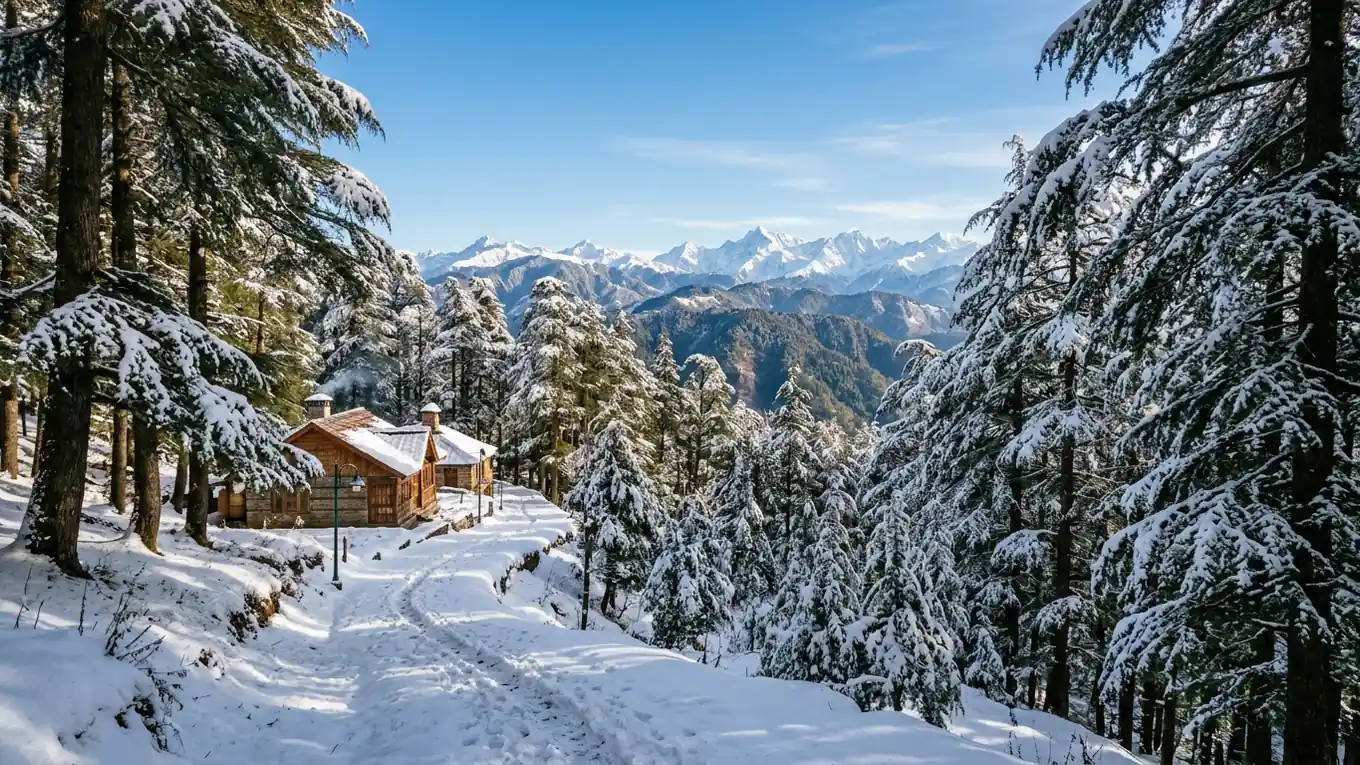
Winter brings a serene transformation to Chail that contrasts sharply with crowded commercial hubs. When snow blankets the ridge, the dense deodar forests (Cedrus deodara) hold soft white cushions on their drooping needles, filtering sunlight into luminous forest glades. The atmosphere is remarkably still, broken only by the soft rustle of wind through the boughs.
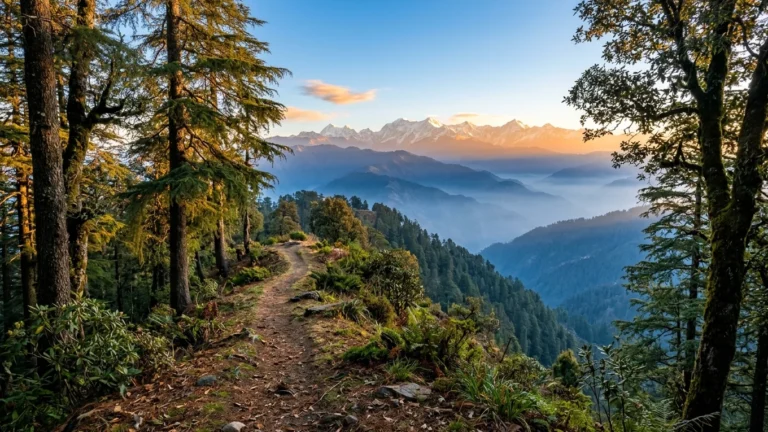
Even on clear, snow-free winter days, Chail possesses extraordinary charm. As explored in our guide to Himalayan panoramas and clear mountain air, crisp mountain fronts sweep away plains haze. South-facing vantage points provide sweeping views across surrounding valleys, with distant peaks like Choor Chandni (Churdhar, 3,647 m) visible under clear skies.
4. Places to Explore During a Winter Visit
Winter travel in Chail is best experienced at an unhurried pace. These celebrated landmarks take on a distinctive character during the cold months:
Chail Palace (Heritage Summer Estate)
Built in 1891–1892 by Maharaja Rajinder Singh of Patiala as his summer capital (and expanded later by his son, Maharaja Bhupinder Singh), this stone palace sits amidst 75 acres of deodar woodlands on Rajgarh Hill. Acquired by the state in 1972, it now operates as an HPTDC heritage hotel, with day visitors permitted on the grounds for a nominal entry fee.
Chail Cricket Ground & Military School Campus
Perched at 2,444 metres (8,018 feet), this historic ground was developed in 1893 on a levelled hilltop. The ground is situated within the active residential campus of the Rashtriya Military School (RMS) under the Ministry of Defence. Because it is a functioning military educational institution, casual public access to the sports ground and school campus is restricted under institutional security protocols, and travellers should not expect open recreational access to the pitch.
Kali Ka Tibba (Blossom Hill Viewpoint)
Set atop Blossom Hill, this white marble temple dedicated to Goddess Kali provides 360-degree vantage points over the Shivalik hills and distant crests like Churdhar in clear weather. Travel Caution: The narrow 2-kilometre approach road climbs shaded northern slopes where frost and black ice frequently form. Following snowfall or sub-zero nights, this steep incline can become impassable for standard passenger vehicles; confirm local road conditions in the village before attempting the ascent.
Chail Wildlife Sanctuary & Forest Trails
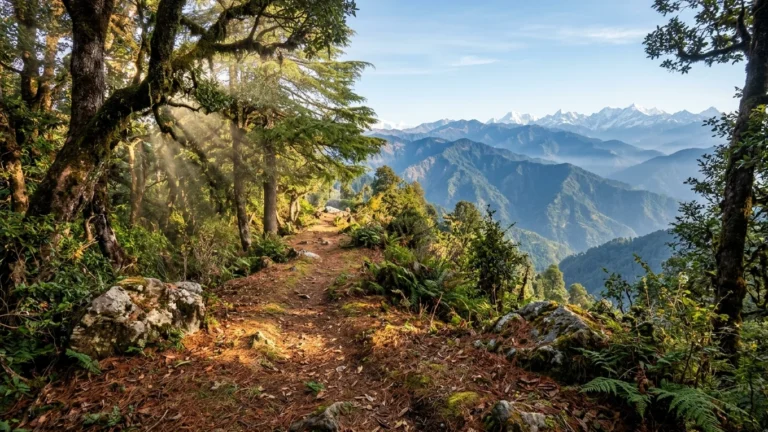
Covering over 10,000 hectares of oak and deodar forest, the sanctuary offers peaceful walking corridors. As highlighted in our unhurried guide to Chail’s pine forest trails, winter mornings provide crisp paths where quiet walkers may spot barking deer, goral, and pheasants.
5. Is the Road to Chail Safe During Snowfall?
Driving to Chail in winter requires choosing the right mountain route. Chail can be approached via two distinct corridors from NH5:
- The Lower-Elevation Route via Kandaghat & Sadhupul (Recommended): Branching off NH5 at Kandaghat, this 29-kilometre road climbs along the Ashwani river valley via Sadhupul. While its lower sections sit below the higher ridgeline snow zones, weather conditions shift rapidly during winter storms, and no mountain corridor can be considered completely free of winter hazards. Local police, administration travel advisories, and active road-clearing operations strictly take precedence.
- The Route via Kufri & Mundaghat (Avoid During Snow): Crossing crests above 2,500 metres, this alternate route regularly suffers heavy snow accumulation, thick black ice, and major traffic gridlocks during winter storms. Avoid this road whenever snow is forecast.
The primary winter road hazard is black ice—a transparent glaze forming when snowmelt refreezes in road shade. For detailed mechanics and tyre advice, see our companion guide on winter road safety and vehicle preparation for Chail.
Prudent Mountain Driving Guidelines: Plan journeys during daylight hours when warmer temperatures reduce morning road frost. While two-wheel-drive cars handle dry winter tarmac reliably, driving across unplowed snow or black ice is hazardous. Crucially, four-wheel drive does not guarantee braking traction on ice and cannot replace winter tyres or chains when conditions demand them. Use low gears for engine braking, avoid abrupt steering or braking inputs, and consult our Delhi to Chail road trip guide for highway waypoints.
6. What Should You Pack for Chail in Winter?
Winter temperatures in Chail can range from comfortable daytime highs under direct sun to sub-zero nights. Dressing comfortably requires a versatile three-layer system:
- Base Layer: Thermal tops and bottoms of merino wool or synthetic wicking fabrics.
- Mid Layer: A fleece jacket or lightweight down sweater that traps body warmth during outdoor walks.
- Outer Layer: A windproof and water-resistant parka or alpine shell to deflect chilly winds and precipitation.
- Footwear & Walking Safety: Waterproof hiking shoes or ankle boots with deep rubber lugs. Flat street sneakers slip dangerously on frost. Take short, deliberate steps when walking on shaded tarmac or stone steps, and keep hands out of pockets to maintain balance.
- Accessories: Woollen beanies, insulated gloves, UV sunglasses to prevent snow glare, sunscreen, and lip balm for dry mountain air.
7. Where Should You Stay in Chail During Winter?
Your lodging choice defines your winter comfort. Thin concrete rooms or unheated canvas tents are poorly suited for sub-zero mountain nights; choose insulated wooden cottages designed to retain indoor warmth.
Natural timber holds radiant warmth after a cold day outdoors. When choosing a stay, confirm these winter essentials in advance:
- Room Heating Arrangements: Guests planning a winter stay should confirm the available room-heating arrangements, operating hours, and any additional charges directly with the property before booking.
- Dependable running hot water backed by power generators for winter weather outages.
- Vehicle-accessible parking avoiding steep, icy staircases.
- Freshly prepared hot meals served in enclosed dining spaces.
At Upvan Chail Camps & Cottages, winter travellers stay in solid wooden and stone cottages featuring private balconies and attached modern washrooms. Guests planning a winter stay should confirm the available room-heating arrangements, operating hours, and any additional charges directly with the property before booking, ensuring a comfortable base overlooking quiet pine valleys.
8. Is Chail Worth Visiting If There Is No Snow?
Travellers often worry about arriving to find bare ground. Yet Chail remains deeply rewarding even without snow. Many visitors prefer clear winter weeks for these reasons:
- Sun-Drenched Afternoons: Under clear skies, daytime sun makes it delightful to relax on open terraces or walk pine ridges without bulky snow gear.
- Pure Mountain Air: While northern plains suffer severe winter smog trapped beneath inversion layers, Chail’s ridge sits well above the haze, offering refreshing mountain air.
- Crystalline Mountain Views: Crisp air creates exceptional visibility across distant snow ranges often obscured by summer haze.
- Peace and Solitude: While Shimla faces heavy tourist traffic, Chail remains quiet and unhurried—making it one of the finest weekend getaways from Delhi within 7 hours.
9. Frequently Asked Questions About Snowfall in Chail
Can I see snow in Chail in December?
Snowfall rarely occurs before late December. While cold weather sets in early, snowfall around Christmas is an occasional occurrence rather than an annual certainty. Most early December days are sunny, dry, and cold.
Which month has the highest chances of snowfall in Chail?
Historically, January is the coldest month across the region and offers the most favorable window for snowfall in Chail, as Western Disturbances typically become most active across Himachal Pradesh during mid-to-late January.
Does Chail receive more snow than Shimla or Kufri?
While Chail (2,250 m) and Shimla (2,205 m) share similar altitudes, official weather records exist for Shimla rather than Chail. Regional storms affect both areas, but local topography, slope aspect, and forest canopy create distinct microclimates. In contrast, nearby Kufri sits higher at over 2,510 metres, where colder temperatures regularly yield heavier, more persistent snow accumulation.
What type of accommodation is best suited for winter in Chail?
Solid wooden and stone cottages provide a more substantial accommodation structure than canvas tents for winter stays. At Upvan Chail Camps & Cottages, running hot water and power backup are listed among the property facilities. Room heaters and warm alpine blankets are available upon request, according to the property’s current information. Guests should confirm availability, operating arrangements and any additional charges directly with the property before booking.
Can tourists enter and play cricket on the Chail Cricket Ground?
No. The historic cricket ground is located on the active campus of the Rashtriya Military School (RMS) under the Ministry of Defence. Because it is a functioning residential military school, casual tourist access to the pitch, pavilion, and school sports grounds is restricted under campus security rules. Visitors should not expect public recreational access to the ground.
How far is Chail from Delhi and Chandigarh in winter?
Chail is approximately 340 kilometres from Delhi (about 7 to 8 hours via Kandaghat) and 105 kilometres from Chandigarh (about 3.5 hours). In winter, plan your driving during daylight hours to avoid sub-zero evening temperatures when road frost and black ice form.
10. Concluding Thoughts: Planning an Unhurried Winter Mountain Journey
Planning a winter holiday around snowfall requires realistic expectations. Snow is an atmospheric gift rather than a scheduled amenity. Shifting focus from chasing snow to enjoying forest stillness makes Chail one of the finest cold-weather retreats in northern India.
Whether waking to fresh snow or walking sunlit deodar trails, Chail offers true solace. Check forecasts, confirm route advisories via Kandaghat, pack warm layers, and let the quiet mountain winter unfold at its own pace.
Plan Your Winter Retreat with Upvan Hotels
Looking for cosy wooden cottages, tranquil deodar views, and personalised winter route guidance? Explore our destination guide for Chail, browse our hillside cottages at Upvan Chail Camps & Cottages, or connect with our team at the Upvan Travel Desk for winter travel queries and reservation coordination.
Upvan Himalayan Journal · Authentic Himalayan hospitality, thoughtful slow travel, and unhurried mountain sanctuaries.
Plan Your Mountain Retreat with Upvan
Experience handpicked mountain resorts, pine-sheltered cottages, and riverside sanctuaries across Himachal Pradesh, Uttarakhand, and near Delhi NCR. Enjoy verified hospitality, best direct rates, and personalized mountain itineraries.