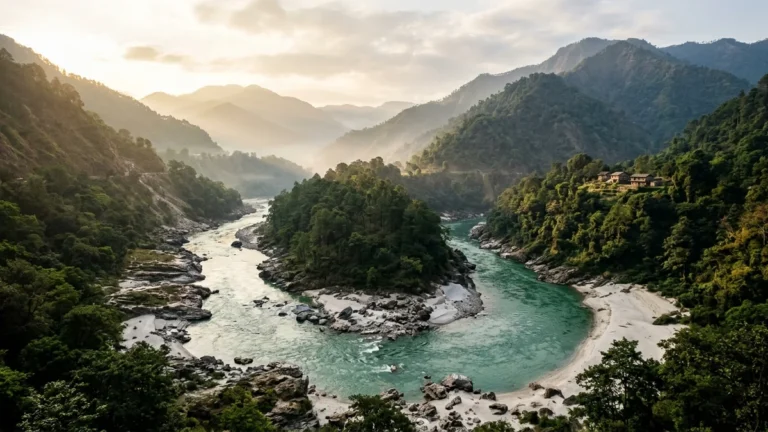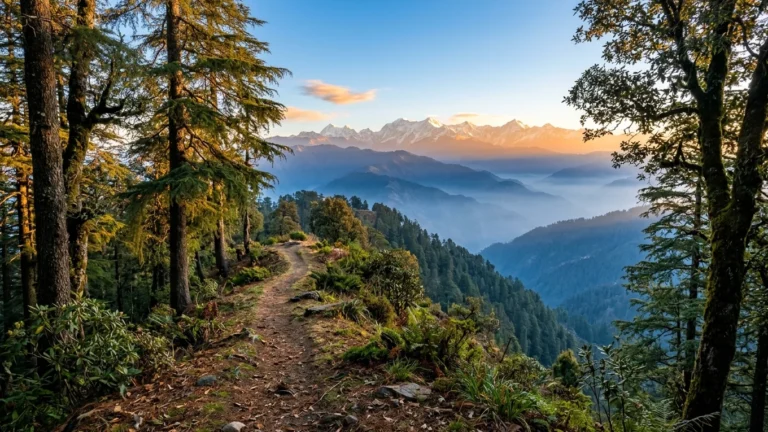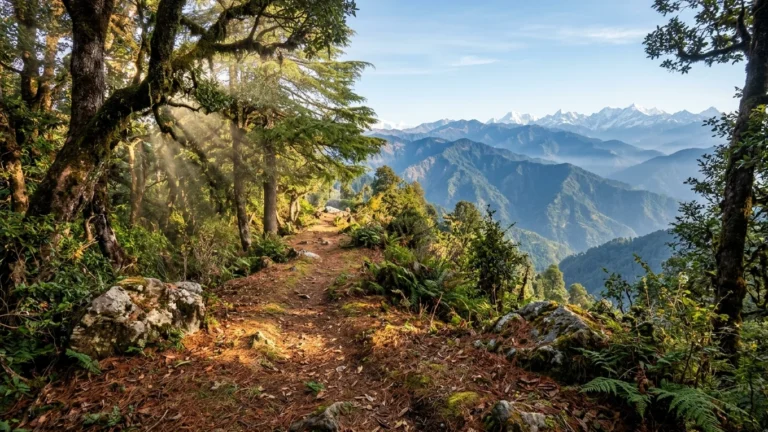
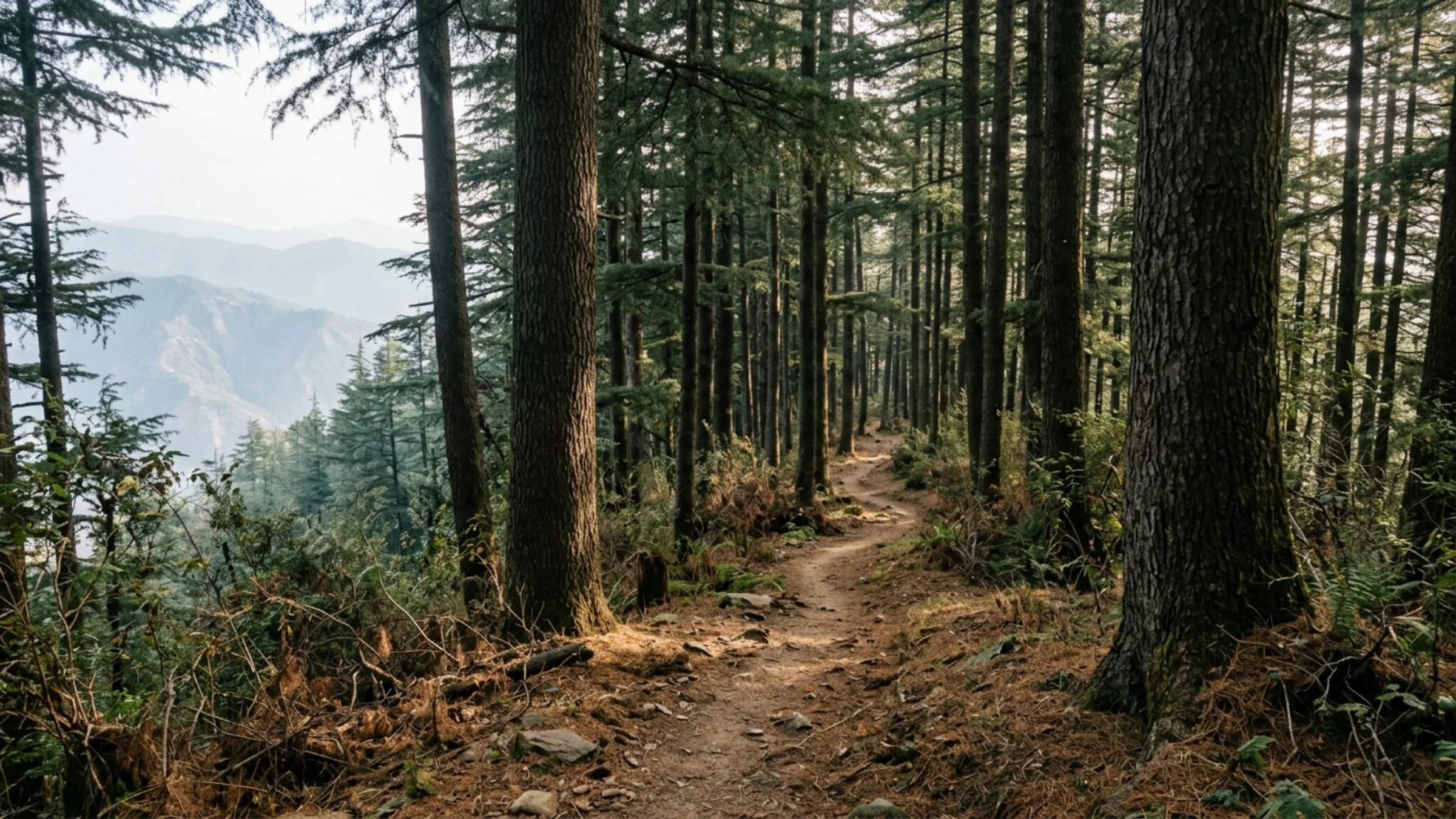
Chail at a Glance: Situated at approximately 2,250 meters (7,380 feet) in Himachal Pradesh’s Solan district, Chail is a quiet mountain retreat roughly 340 kilometers north of Delhi NCR and 45 kilometers from Shimla. Established in 1891 by Maharaja Rajinder Singh of Patiala as a private summer refuge, the ridge is sheltered by protected cedar and pine forests, a historic cricket ground perched at 2,444 meters, panoramic valley vistas from Kali Ka Tibba, and unhurried walking trails. For travellers seeking a slower Himalayan journey centered on forest paths, mountain stillness, and secluded hillside stays, Chail offers a peaceful alternative to crowded hill stations.
| Travel Parameter | Verified Detail |
|---|---|
| Geographic Altitude | Approx. 2,250 meters (7,380 feet) above sea level |
| Administrative Location | Solan District, Himachal Pradesh, India |
| Distance from Delhi NCR | Approx. 340 km from Central Delhi / ~375 km from Gurgaon |
| Driving Duration | Approx. 7 to 8 hours via NH44 and the Kandaghat mountain road |
| Best Travel Seasons | March to June (Summer respite) & September to November (Clear Himalayan panoramas) |
| Primary Appeal | Protected pine forest walks, royal heritage grounds, 360-degree sunset vistas, quiet hillside stays |
| Curated Stay Option | Chail Camps & Cottages (Verified Upvan Partner Stay) |
Why Chail Feels Different: The Forest Sanctuary of the Shimla Hills
Most travellers driving into the lower Himachal hills follow the highway stream toward Shimla, passing Kandaghat toward the parking ramps and crowded promenades of the state capital. Yet at Kandaghat, a quieter road branches eastward, climbing into an older, slower Himachal.
This 29-kilometer mountain road winds past stepped valley farms and the quiet Ashwani riverbank at Sadhupul before ascending into a continuous canopy of Himalayan Cedar (Cedrus deodara) and Chir Pine (Pinus roxburghii). Crossing the 2,000-meter contour, highway noise fades into forest silence, replaced by the dry crunch of pine needles underfoot and the clean scent of cedar woods.
Sitting at approximately 2,250 meters (7,380 feet), Chail occupies a singular geographic niche in Solan district. Although only 45 kilometers from Shimla by road, it belongs to an entirely different emotional landscape. There is no commercial Mall Road, no neon storefronts, and no traffic congestion. Life unfolds along quiet ridge lanes lined with century-old cedar trees, where days are measured by village footpaths, passing cloud mist, and birdcalls.
For urban travellers departing Delhi NCR, Chandigarh, or Punjab, this contrast is restorative. Chail is a forest sanctuary designed for slow exploration. A morning walk along solitary ridge paths, an hour exploring historic royal grounds, or an evening watching alpenglow touch distant snow peaks from a wooden cottage balcony: each experience encourages an unhurried pace. If you are beginning to plan your journey, you can explore our curated Chail destination guide and stays to understand how this tranquil ridge fits into your broader travel plans.
The Living Heritage: Royal Origins, Chail Palace & the Cricket Ground
Chail’s quiet dignity was deliberately planned as an exclusive mountain sanctuary away from imperial politics. Its establishment in 1891 reflects princely ambition and a deep appreciation for mountain seclusion.
The Patiala Connection: Maharaja Rajinder Singh’s Vision (1891)
In the summer of 1891, a diplomatic disagreement in British Shimla between Lord Kitchener, Commander-in-Chief of the British Indian Army, and the young Maharaja Rajinder Singh of Patiala (reigned 1876–1900) led the British administration to restrict the Maharaja from entering Shimla.
Maharaja Rajinder Singh resolved to build his own summer capital at a higher altitude than British Shimla. Acquiring land from the ruler of Keonthal across the southern valley, he chose three adjoining hills:
- Rajgarh Hill: Chosen for the main royal palace and estate grounds.
- Pandhava Hill: Designated for administrative residency and royal guest housing.
- Blossom Hill: The highest ridge crest, reserved for temple devotion.
Through this planning, Chail was founded in 1891 as Patiala’s summer capital. While popular folklore occasionally confuses Maharaja Rajinder Singh with his successor, historical records confirm that Maharaja Rajinder Singh founded Chail in 1891. His son, Maharaja Bhupinder Singh (reigned 1900–1938), later expanded the estate, leveled the mountain crest to construct the famous cricket ground in 1893, and established Chail’s sporting heritage. Distinguishing the founder from the developer preserves historical accuracy.
Chail Palace and the 75-Acre Deodar Grounds
The centerpiece of Rajgarh Hill is Chail Palace, completed in 1891 amidst 75 acres of protected deodar woodlands. Built with local dressed stone, slate gables, classical verandas, and wood-carved eaves, the palace reflects Victorian country house architecture shaped by Himalayan craftsmanship.
Transferred to the Government of Himachal Pradesh in 1972, the estate is operated by HPTDC as The Palace Hotel Chail. Non-resident visitors may explore the 75-acre heritage grounds, formal terraced gardens, stone pathways beneath ancient cedars, and the reception lobby and cafe. Interior royal cottages and active bedroom wings remain private to overnight hotel guests. Grounds access is covered by a nominal entry fee (approximately ₹100 per adult, subject to periodic HPTDC revision). Morning hours (10:00 AM to 1:00 PM) offer the most peaceful atmosphere for strolling beneath the deodars.
The Historic Cricket Ground at 2,444 Meters: Facts and Access Realities
Perched on a leveled mountain crest above the town lies the historic Chail Cricket Ground. Built in 1893 under the patronage of Bhupinder Singh at an elevation of 2,444 meters (8,018 feet) above sea level, it is internationally recognized as the highest historic cricket ground in the world.
Travel blogs occasionally misinform travellers by suggesting that visitors can freely walk on the pitch or play casual matches. Understanding its governance ensures respectful travel:
- Military School Campus: The ground sits entirely within the campus of Rashtriya Military School (RMS) Chail, operating under the Ministry of Defence, Government of India.
- Cadet Training Facility: It serves as an active daily parade and athletic training facility for cadets.
- Strict Civilian Pitch Prohibition: Civilian tourists are strictly barred from entering the playing field, walking on the pitch, or entering school buildings. Military security enforces these rules.
- Permitted Tourist Viewing: Travellers may view and photograph the ground from the designated public roadside perimeter fence, which offers an unobstructed perspective of the pitch encircled by towering deodars.
Viewing the ground from the exterior takes about 15 minutes, respecting the academy while allowing visitors to appreciate this unique mountain sports landmark.
Walking the Ridges: Five Documented Forest Circuits
Chail remains sheltered under an expansive forest canopy. Upper ridges feature dense Himalayan Cedar (Cedrus deodara), mid-elevation slopes host aromatic Chir Pine (Pinus roxburghii), and shaded ravines shelter native Banj Oak (Quercus leucotrichophora) and wild Tree Rhododendron (Rhododendron arboreum).
For travellers who cherish quiet walks, Chail offers five verified walking circuits:
1. Chail Wildlife Sanctuary Eco-Trails
The Chail Wildlife Sanctuary encompasses approximately 109 square kilometers of protected oak and coniferous forest, providing habitat for Barking Deer (kakar), Goral, and the endangered Cheer Pheasant (Catreus wallichii). Marked trails follow gentle contours along upper ridges. Walking along public perimeter roads and village paths is free; venturing into deep core conservation zones or carrying professional long-lens photography gear requires daytime permits from the local Himachal Pradesh Forest Department range office in Chail. Early mornings (6:30 AM to 8:30 AM) offer the best light and bird activity.
2. Chail Palace Heritage Deodar Loop
The walking network within the 75-acre Chail Palace estate provides an effortless stroll on wide gravel paths beneath century-old cedars. The air is cool and fragrant, sheltered by evergreen boughs. A relaxed 2 to 3-kilometer loop takes about an hour, with rustic benches and terraced lawns offering resting points. Access is included with the standard palace grounds ticket.
3. Chail to Gaura Ridge Trail
This classic trail begins on the southern fringe of town, following an old mountain bridle path down a south-facing pine ridge toward Gaura. Dense deodars give way to chir pines, terraced valley farms, and slate-roofed hamlets, with open views of the Solan valley. The walk takes 3 to 4 hours round-trip; wear sturdy walking shoes with reliable tread for pine-needle descents.
4. Chail to Jhajja Pine Walk
Heading toward the hamlet of Jhajja, this trail follows an undulating ridge path through open pine woods. With gentle gradients and expansive valley views on both sides, this 2 to 2.5-hour round-trip stroll is ideal for peaceful contemplation and afternoon photography when low sunlight warms the pine trunks.
5. Sidh Baba Ka Mandir Forest Approach
Situated on a wooded hillock between Rajgarh and Pandhava hills, this shrine honors an ascetic whose dream appearance prompted Maharaja Bhupinder Singh to relocate palace construction and dedicate a temple instead. An easy, shaded deodar trail climbs gently to the courtyard (45 minutes to 1 hour round-trip). Remove shoes at the courtyard threshold and maintain quiet decorum.
Sunset Vistas from Kali Ka Tibba
While valley trails immerse you in the forest interior, Kali Ka Tibba provides an expansive panoramic perspective.
Situated atop Blossom Hill at approximately 2,270 meters, this white marble temple dedicated to Goddess Kali (Shakti) rises above the surrounding canopy. Its open courtyards offer an unobstructed 360-degree panoramic vista across three Himalayan horizons:
- Southeast: The snow-crowned crest of Choor Chandni (Churdhar) Peak (3,647 meters / 11,965 feet), the highest summit in the southern Himachal ranges.
- Northwest: Terraced mountain ridges leading toward Shimla and Kufri.
- South/Southwest: The rolling green Shivalik foothills stepping down toward the northern plains.
In the late afternoon, visitors gather on the marble terrace to watch the sun drop behind the Shivalik horizon, casting a warm alpenglow across the deodar ridges before the lights of Shimla begin to twinkle across the valley. Reached via a narrow 6-kilometer hill road from Chail bazaar (15–20 minutes by car) or a 1.5-hour uphill walking trail, visitors must dress modestly and remove shoes at the sanctum threshold.
Down the Valley: The Sadhupul Riverbank
Along the Kandaghat-Chail mountain road lies Sadhupul, a pleasant river valley settlement where the road crosses the shallow Ashwani stream. Surrounded by stepped farmland, walnut trees, and bamboo thickets, Sadhupul offers a warm, low-altitude contrast to Chail’s pine heights. Roadside tea stalls and simple eateries sit near the bridge, allowing travellers to stretch their legs, drink fresh ginger tea, and dip their feet into cool mountain water before ascending to the pine ridges.
An Unhurried 3-Day Itinerary for Chail
To experience Chail without rushing, plan a stay of 2 to 3 nights. This balanced itinerary pairs naturally with our approach to romantic mountain getaways that prioritize privacy and natural pacing.
| Day | Focus & Activities | Suggested Pacing |
|---|---|---|
| Day 1 | Scenic Arrival, Forest Air & Starlit Bonfire | Early departure; check-in by 2:30 PM; quiet balcony tea. |
| Day 2 | Royal Heritage, Cricket Crest & Sunset at Kali Ka Tibba | Morning palace stroll; golden hour at Blossom Hill. |
| Day 3 | Sanctuary Morning Walk & Leisurely Country Descent | Birdwatching at dawn; fresh breakfast; mid-morning drive. |
- Day 1: Mountain Ascent and Forest Stillness: Depart Delhi NCR early along NH44, pausing near Murthal or Karnal before ascending the Himalayan Expressway past Parwanoo. At Kandaghat, turn right onto the mountain road, stopping at Sadhupul for riverbank tea before reaching Chail. Check in at your hillside cottage by 2:30 PM and relax on your private balcony overlooking terraced pine slopes. In the late afternoon, take a gentle walk along the village lane. After dusk, gather around an outdoor lawn bonfire under clear Himalayan stars, followed by dinner.
- Day 2: Royal Monuments, Cricket History & Golden Hour: After breakfast, spend two hours exploring the Chail Palace grounds beneath century-old deodars. Next, drive up to the Chail Cricket Ground at 2,444 meters to view the historic playing field from the perimeter fence. Enjoy local Himachali dishes in Chail bazaar, followed by a quiet forest walk to Sidh Baba Ka Mandir. By late afternoon, drive up to Kali Ka Tibba to watch the sunset illuminate the Shivalik ranges and Churdhar peak, returning to your cottage for a quiet evening.
- Day 3: Sanctuary Trails and Country Descent: Take an early morning nature walk along the outer Chail Wildlife Sanctuary eco-trails to spot native mountain birds. Return for a relaxed breakfast on the lawn, pack at leisure, and check out by mid-morning. Begin your descent toward Kandaghat and the plains, refreshed by three days of pine air.
Where to Stay: Choosing Quiet Ridges over Roadside Towns
Because the central Chail bazaar consists of a modest intersection with transit hotels, staying in town exposes you to traffic noise. To experience the genuine character of Chail, choose lodging on an elevated forested ridge outside the commercial hub.
Upvan’s Verified Booking Option: Chail Camps & Cottages
For travellers seeking seclusion and authentic hospitality, Upvan coordinates direct bookings at our verified partner stay: Chail Camps & Cottages.
Situated on a terraced slope amidst pine and deodar canopies, the property offers a calm mountain setting:
- Forest View Deluxe Cottages: Independent wooden cottage units featuring warm timber paneling, comfortable bedding, en-suite bathrooms with hot water geysers, and private balconies overlooking forested valleys.
- Alpine Swiss Tents: Raised masonry plinths support weather-proof canvas tents with attached modern bathrooms and electricity for comfortable glamping.
- Property Grounds & Dining: Terraced green lawns provide space for morning tea and low-rope adventure activities, while a covered dining hall serves freshly prepared North Indian and regional buffet meals.
- Evening Campfires: Lawns host evening bonfires beneath clear starlit skies.
Upvan acts as direct booking coordinator and concierge partner for this verified property. To review photography, guest policies, and availability, view details for Chail Camps & Cottages before confirming dates.
Seasonal Rhythms: When to Plan Your Visit
Chail is a year-round destination, with each season offering distinct climate patterns and landscape moods:
| Season | Months | Temperature Range | Primary Appeal |
|---|---|---|---|
| Spring Respite | March – April | Day: 16°C to 22°C Night: 6°C to 11°C |
Wild blossoms, crisp sun, walks |
| Summer Escape | May – June | Day: 20°C to 27°C Night: 12°C to 16°C |
Deodar shade, plains respite |
| Monsoon Mist | July – August | Day: 18°C to 23°C Night: 14°C to 17°C |
Emerald moss, rolling clouds |
| Autumn Clarity | Sept – Nov | Day: 15°C to 21°C Night: 7°C to 12°C |
Sharp snow peaks, golden sunlight |
| Winter Crisp | Dec – Feb | Day: 8°C to 14°C Night: -2°C to 4°C |
Frosty mornings, possible snow |
- Spring Respite (March–April): Warm sunny days and cool evenings. Between late March and mid-April, stepped terraces bloom with apple and apricot blossoms, while wild rhododendrons splash crimson across the forest understory.
- Summer Escape (May–June): Daytime temperatures range comfortably between 20°C and 27°C under protective deodar canopies, offering a cool mountain refuge from plains heat waves without commercial crowds.
- Monsoon Mist (July–August): Cloud banks sweep up from the plains, clothing cedar trunks in emerald moss and mist. Mountain driving requires caution, but watching rainfall from a sheltered cottage veranda offers a deeply peaceful retreat.
- Autumn Clarity (September–November): Rain clouds withdraw by mid-September, leaving blue skies and unmatched atmospheric clarity. Sharp snow peak panoramas, dry trails, and golden afternoon light make this Chail’s finest walking season.
- Winter Crispness & Snow (December–February): Clear mountain days give way to frosty nights (-2°C to 4°C). Snowfall is an episodic weather event typically occurring between late December and early February rather than a daily certainty; pack thermal layers and confirm effective cottage heating provisions.
How to Reach Chail: Driving Routes and Transit Practicalities
Reaching Chail is straightforward via major highway networks before transitioning into scenic mountain roads.
Driving from Delhi NCR
- Corridor: Delhi NCR → NH44 via Panipat, Karnal, Ambala → Zirakpur bypass → NH5 / Himalayan Expressway past Parwanoo → Solan bypass → Kandaghat → Kandaghat–Chail Road via Sadhupul → Chail.
- Distance & Duration: Approx. 340 km from Central Delhi (7–8 hours) and ~375 km from Gurgaon (7.5–8.5 hours), including standard rest halts.
- Road Conditions: Plains sections follow multi-lane national expressways. The final 29 km ascent from Kandaghat is an intermediate two-lane paved hill road maintained by HP PWD, easily navigable by standard sedans, hatchbacks, and SUVs.
Winter Route Priority: Kandaghat vs. Kufri
During winter snowfall (late December through January), the Kandaghat–Sadhupul–Chail road is prioritized for snow-clearing by HP PWD Solan division and remains drivable long after higher elevations close. Conversely, the alternate Kufri–Chail road crosses high ridges exceeding 2,500 meters that frequently accumulate deep drifts and black ice; travellers should avoid the Kufri route during cold winter weather.
Rail and Air Connections
- Broad-Gauge Rail: Kalka Railway Station (KLK) is the primary broad-gauge railhead (~85 km / 3 hours drive), connected to Delhi by the Kalka Shatabdi and Vande Bharat expresses.
- Heritage Toy Train: The UNESCO-listed Kalka–Shimla Toy Train stops at Kandaghat Railway Station, where local taxis reach Chail in about an hour.
- Air: Chandigarh International Airport (IXC) is the primary commercial air hub (~115 km / 3.5 hours drive). Shimla Regional Airport at Jubbarhatti (SLV) lies ~65 km away with limited regional flights.
Practical Mountain Etiquette & Planning Advice
- Altitude Adjustment: At 2,250 meters, the air is thinner than on the plains. Stay hydrated and rest on your arrival afternoon to avoid mild fatigue.
- Leave No Trace: Chail’s woodlands remain pristine due to local stewardship. Carry back all plastic and trash, keep to marked trails, and never light open fires among dry pine needles.
- Respect Sacred & Military Zones: Remove footwear before entering temple courtyards at Kali Ka Tibba and Sidh Baba. Respect the boundaries of Rashtriya Military School Chail; do not bypass fences or photograph active drills.
- Connectivity & Cash: Major networks (Jio, Airtel) provide good 4G in town, but signals weaken on deep forest paths. ATMs are limited, so carry sufficient cash for local entry tickets and roadside stops.
Frequently Asked Questions About Visiting Chail
1. How far is Chail from Delhi, and how long does the drive take?
Chail is approximately 340 kilometers from Central Delhi and roughly 375 kilometers from Gurgaon. Under normal road conditions, the drive takes 7 to 8 hours from Delhi (7.5 to 8.5 hours from Gurgaon) via NH44, the Himalayan Expressway at Parwanoo, and the 29-kilometer mountain ascent from Kandaghat through Sadhupul.
2. What makes Chail different from Shimla and Kufri?
While Shimla is a bustling colonial city with dense traffic and crowded streets, Chail is an unhurried forest settlement spread across quiet, protected ridges. It features continuous deodar and pine canopies, peaceful walking trails, clean mountain air, and minimal commercial congestion.
3. Can tourists visit and play cricket on the historic Chail Cricket Ground?
No, civilian tourists cannot enter the pitch or play matches. Built in 1893 at 2,444 meters, the ground sits within the sovereign campus of Rashtriya Military School Chail under the Ministry of Defence, serving as an active training field for cadets. Visitors are welcome to view and photograph the ground from the designated roadside perimeter fence.
4. What style of accommodation does Upvan coordinate in Chail?
In Chail, Upvan coordinates bookings at Chail Camps & Cottages, a verified partner property located on a secluded pine ridge. The stay offers independent Forest View Deluxe Cottages with wooden interiors and private mountain balconies, as well as Alpine Swiss Tents on solid plinths with attached modern bathrooms.
5. When is the best time to visit Chail for nature walks and clear views?
Spring/summer (March to June) brings pleasant daytime temperatures (20°C to 27°C) and cool evenings, offering ideal relief from plains heat. Autumn (September to November) provides exceptional atmospheric clarity, crisp weather, and unobstructed panoramas of snow-capped Himalayan peaks.
Planning Your Chail Getaway
Chail preserves what Himalayan hill stations used to be: places defined by the sound of wind through pine needles, the fragrance of cedar, panoramic horizons, and days paced by the natural arc of the mountain sun.
If you are ready to begin planning, you can enquire with Upvan’s travel desk to check dates and room arrangements, speak directly with our team at tel:09718200365, connect via instant WhatsApp concierge, or explore all Upvan destinations to discover other quiet mountain retreats across the Himalayas.
Plan Your Mountain Retreat with Upvan
Experience handpicked mountain resorts, pine-sheltered cottages, and riverside sanctuaries across Himachal Pradesh, Uttarakhand, and near Delhi NCR. Enjoy verified hospitality, best direct rates, and personalized mountain itineraries.