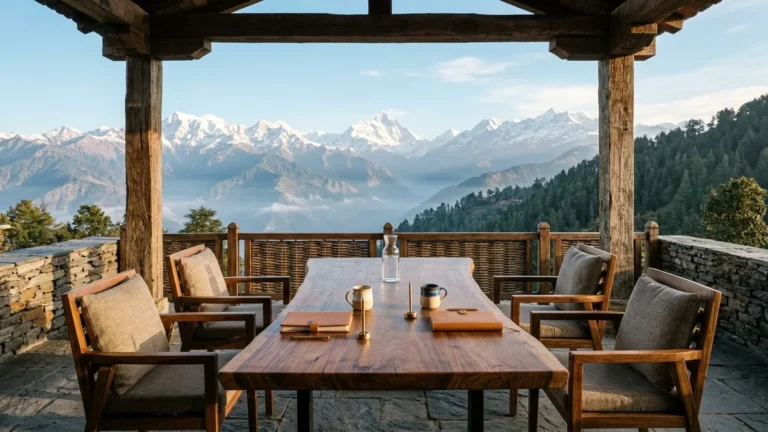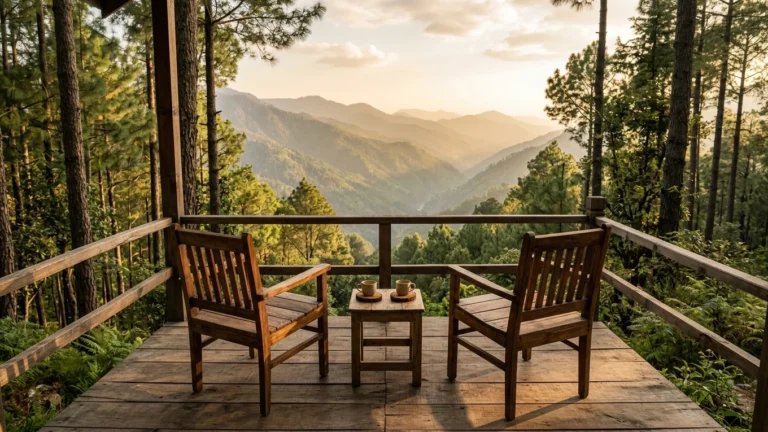
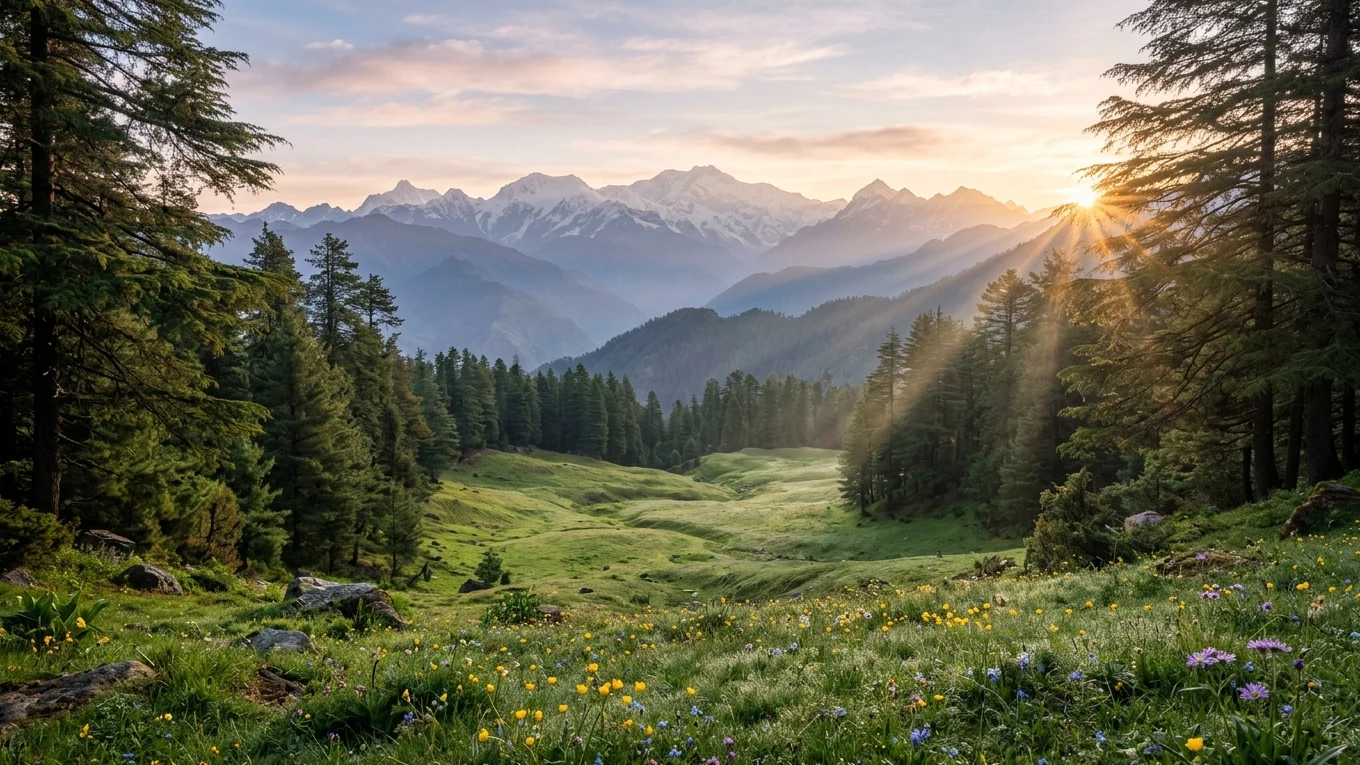
Choosing Family Mountain Stays: Planning a successful multi-generational holiday in the Himalayas requires shifting focus away from congested mall roads toward properties featuring level grounds, open meadows, and gentle forest trails. When traveling with toddlers, school-age children, working parents, and senior grandparents, steep terraced hillsides and multi-flight staircases often turn holidays into exhausting ordeals. The most restorative family stays sit along gentle mid-elevation ridges (1,800 to 2,600 metres)—such as Chail in Himachal Pradesh or Kanatal and Chakrata in Uttarakhand. These destinations combine wide open lawns for children to run safely, level forest walks shaded by cedar and oak trees, dependable room heating, and accessible ground-floor living, ensuring every generation finds rest at their own natural pace.
Travelling to the Himalayas with three generations under one roof is an enriching experience, yet it is one of the most demanding journeys a family can undertake. When grandparents, working parents, energetic youngsters, and toddlers travel together, their physical rhythms, comfort requirements, and expectations diverge sharply. While children crave open space to run and explore without confinement, seniors need flat footpaths, gentle inclines, and warmth. Meanwhile, parents often seek quietude, fresh alpine air, and a reliable cup of mountain tea without having to negotiate congested tourist traffic or supervise toddlers near precarious drops.
Too often, mountain holidays are booked on the visual promise of a “panoramic valley view,” only for families to arrive and discover that the hotel clings to a 45-degree slope. Reaching the dining room requires navigating sixty uneven concrete steps, parking is four switchbacks down a gravel incline, and stepping outside means confronting a busy motor road with no sidewalk. For families researching curated family holiday retreats in the hills, avoiding these structural pitfalls requires a deliberate approach to destination selection, property architecture, and daily travel pacing.
The Multi-Generational Dilemma: Balancing Energy, Ease, and Safety
The fundamental challenge of a multi-generational mountain trip is that typical commercial tourism prioritizes high-density vertical development. In popular hill stations like Shimla, Mussoorie, or Nainital, hillside real estate is premium. Hotels expand vertically down cliff faces, creating multi-tiered complexes where elevators are rare, staircases are steep, and flat outdoor ground is nonexistent. For an energetic seven-year-old, indoor hallways feel restrictive; for an elderly grandparent with arthritis, a three-storey staircase between the bedroom and lawn represents a physical barrier that restricts them to their room for the entire weekend.
True hospitality for families begins with spatial freedom. Stays surrounded by level grassy clearings, orchards, or natural meadows provide a safe communal anchor. Here, morning sun illuminates open lawns where seniors can sit comfortably in outdoor wicker chairs, wrapped in wool shawls, while children chase pine cones or play badminton just thirty yards away. No one is isolated, no one is exhausted by structural hurdles, and the entire family shares the restorative stillness of the mountains.
Achieving this harmony requires filtering mountain stays through five core operational realities: terrain gradient, walkability, heating reliability, kitchen flexibility, and road accessibility. Browsing curated Himalayan destinations reveals that choosing quieter, broader ridges allows families to trade crowded commercial bazaars for expansive outdoor grounds.
The Property Selection Audit: 5 Non-Negotiable Checks Before Booking
Before placing a deposit on any mountain resort or boutique cottage for a family gathering, conduct a thorough property audit. Standard online booking photographs often obscure steep gradients through clever wide-angle framing. Calling the property directly and asking precise, practical questions prevents unwelcome surprises on arrival.
| Audit Dimension | Key Question to Ask Property | Why It Matters for Families | Recommended Standard |
|---|---|---|---|
| Terrain & Stairways | How many steps from parking to room, and from room to the dining lawn? | Seniors with joint stiffness and parents carrying toddlers struggle on steep stairways. | Ground-level cottages or rooms with zero to five threshold steps to lawns. |
| Open Grounds | Is the lawn flat and fenced, or is it a narrow balcony on an open cliff edge? | Children need secure open perimeters to play safely without fall risks. | At least 200–500 sq metres of level grass bordered by natural hedges or secure fences. |
| Room Heating | What type of winter heating is installed (OFR, blower, or reverse AC)? | Mountain nights dip sharply; dry blower heat irritates infant and senior respiratory tracts. | Oil-Filled Radiators (OFR) and quality electric under-blankets. |
| Kitchen Flexibility | Can the kitchen prepare mild, non-spicy meals on demand (khichdi, clear soups)? | Toddlers and elderly digestions struggle with rich, spicy restaurant gravies. | Cook-to-order kitchen willing to prepare home-style lentils, porridge, and unspiced food. |
| Vehicle Access | Can a private car drive directly to the reception porch for drop-off? | Unloading luggage, baby strollers, and assisting seniors on steep gravel tracks causes fatigue. | Paved, direct driveway to main building; no off-road luggage porterage over long climbs. |
1. Terrain Gradient and Room Proximity to Lawns
Inquire specifically whether ground-floor rooms have direct, step-free access to outdoor lawns. In many stepped mountain resorts, even “ground-floor” rooms require descending three exterior flights of stone steps because the property cascades down a ridge. For multi-generational parties, reserve clustered ground-level cottages where the veranda opens directly onto a flat lawn. This allows seniors to step outside at dawn without negotiating stone stairways damp with morning dew.
2. The Safety of Meadow Perimeters
An open meadow is only relaxing if parents are not on constant high alert. Verify whether the property’s grounds feature gentle, rolling slopes or drop-off retaining walls. Properties built on broad, natural saddles—such as the quiet ridges surrounding Chail or Kanatal—offer expansive grassy grounds where kids can run freely within clear sightlines, far removed from vehicular roads or steep precipices.
3. Winter Heating Infrastructure: Radiators vs Blowers
Between October and March, Himalayan nighttime temperatures drop rapidly, often hovering between 2°C and 8°C even when afternoons are sunny and warm. Many budget hotels provide small ceramic fan heaters that blow hot, parched air, drying out sinuses and causing throat irritation for children and seniors. Look for retreats equipped with Oil-Filled Radiators (OFRs) and heavy-gauge feather duvets. OFRs heat rooms evenly through convection without depleting ambient humidity, ensuring restful, warm sleep for all ages.
4. Kitchen Readiness for Custom Family Meals
Nothing disrupts a family vacation faster than gastrointestinal discomfort. Commercial resort buffets laden with heavy cream, rich spices, and artificial food colours are unsuitable for young children and elderly digestions over a multi-day stay. A family-friendly mountain lodge should have an accommodating kitchen staff happy to prepare fresh, homestyle meals: light moong dal khichdi, mild vegetable broths, steamed rice, fresh curd, and unspiced boiled vegetables on short notice.
Three Exemplary Family Mountain Corridors Compared
When selecting a destination within driving range of Delhi NCR, choose locations that avoid high-density city traffic while providing gentle topography and easy nature excursions. Three distinct mountain sanctuaries offer prime conditions for multi-generational retreats:
| Destination & Region | Altitude & Air Profile | Drive from Delhi NCR | Meadow & Open Space Character | Family Nature Trails | Best Multi-Generational Fit |
|---|---|---|---|---|---|
| Chail Himachal Pradesh |
~2,250 m Temperate pine & deodar |
335–345 km (6.5–7.5 hrs) |
Spacious palace lawns, terraced apple orchards, expansive quiet ridges. | Chail Wildlife Sanctuary dirt trails, Gaura deodar loops. | Ideal balance of gentle walking, royal heritage lawns, and cool pine air. |
| Kanatal Uttarakhand |
~2,590 m High alpine ridge |
305–320 km (6.5–7.5 hrs) |
Panoramic ridgeline meadows facing high Garhwal snow peaks. | Kaudia Forest level pine track (jeep-navigable), Eco Park trails. | Older children and active grandparents who enjoy crisp alpine vistas. |
| Chakrata Uttarakhand |
~2,118 m Ancient cedar highlands |
310–325 km (6.5–7.5 hrs) |
Vast open grassy knolls at Chilmiri Neck; secluded cantonment glades. | Deoban forest edges, gentle cantonment perimeter paths. | Families seeking deep seclusion, pristine silence, and zero commercial clutter. |
Chail, Himachal Pradesh: The Gentle Cedar Sanctuary
Perched along a wide wooded ridge at roughly 2,250 metres (7,380 feet), Chail stands in stark contrast to its bustling neighbour Shimla. Developed historically as the summer retreat of the Maharaja of Patiala, Chail is characterized by expansive estates, gentle forest contours, and magnificent deodar woodlands. The grounds of the Chail Palace feature sprawling, manicured lawns bordered by ornamental trees, where toddlers can toddle on soft turf and grandparents can stroll along level gravel pathways.
The surrounding Chail Wildlife Sanctuary contains gentle, unpaved walking tracks that meander beneath towering cedars with negligible gradient changes. For motorists planning weekend getaways from Delhi, Chail is approached smoothly via the Himalayan Expressway and the quiet Kandaghat-Chail country road, bypassing the urban sprawl of Solan (as detailed in our road guide to weekend mountain getaways under 7 hours from Delhi). Those seeking curated, lawn-oriented stays can explore Chail Camps & Cottages, which offers independent Swiss tents and stone cottages nestled on flat orchard terraces.
For an in-depth exploration of the area’s forest paths, read our companion guide to unhurried walking trails in Chail.
Kanatal, Uttarakhand: High-Altitude Meadows and Himalayan Vistas
Sitting at an impressive 2,590 metres (8,500 feet) along the Mussoorie-Chamba highway, Kanatal provides an authentic high-altitude atmosphere without the congested bottleneck of Mussoorie town. Kanatal’s standout family feature is the renowned Kaudia Forest. Unlike typical mountain trails that require steep rock-hopping, Kaudia offers a broad, five-kilometre dirt trail that follows a nearly level contour through dense oak and cedar canopies. It is one of the rare Himalayan forest walks where three generations can walk side-by-side, and where local safari jeeps are available for family members who prefer not to walk the full return distance.
Another major family attraction near Kanatal is the Surkanda Devi Temple. While the traditional ascent required climbing a grueling 1.5-kilometre flight of steep stone stairs, the installation of an aerial ropeway (cable car) since 2022 allows seniors and young children to glide effortlessly to the 2,750-metre summit in just five minutes, opening panoramic 360-degree views of the Garhwal Himalaya to all ages.
Chakrata, Uttarakhand: Raw Deodar Forests and Meadow Knolls
For families who value deep quiet and unhurried nature over commercial attractions, Chakrata in the Jaunsar-Bawar region offers an unspoiled retreat. Located at roughly 2,118 metres, Chakrata is a tranquil cantonment town surrounded by some of the densest, most ancient deodar cedar forests in the subcontinent. The town’s premier open space is Chilmiri Neck, an expansive plateau of undulating grassy meadows offering unobstructed sunset views across the Shivalik and middle Himalayan ranges.
However, when visiting Chakrata with multi-generational parties, understanding trail accessibility is vital. While Chilmiri Neck is accessible directly by vehicle and features gentle grassy knolls ideal for family picnics, Chakrata’s famous Tiger Falls presents a severe physical barrier. Reaching the base of Tiger Falls requires descending more than 250 to 300 steep, uneven stone steps that become slick with spray. While rewarding for agile teenagers, this descent is hazardous for toddlers and intensely painful for seniors with knee arthritis. Thoughtful trip leaders skip the waterfall stairways in favour of relaxed walks along the shaded cantonment ring road or the rolling meadows of Chilmiri.
Designing an Unhurried Daily Rhythm: The “One Activity” Rule
The single most common mistake on family vacations is over-scheduling. In cities, families are accustomed to cramming multiple destinations, museums, and dinners into a single Saturday. In the mountains, attempting this pace leads to car-sick children, frazzled parents, and exhausted grandparents stranded in mountain road traffic.
Embrace the “One Focal Activity” Rule: plan exactly one gentle outdoor excursion per day, scheduled during the warm mid-morning hours, and leave the remainder of the day completely unscheduled. A balanced family mountain routine follows a natural, unhurried cadence:
| Time Window | Family Routine | Generational Benefit |
|---|---|---|
| 07:30 – 09:00 AM | Gentle morning sunbathing on the meadow lawn; hot tea, ginger biscuits, and light breakfast. | Allows seniors to absorb mountain sunshine; children play on damp-free grass as dew evaporates. |
| 10:00 AM – 01:00 PM | The Day’s Single Excursion: Level forest trail walk (Kaudia Forest or Chail Sanctuary) or meadow picnic. | Optimal temperature and lighting; finishes well before afternoon mountain weather shifts or chills set in. |
| 01:30 – 03:00 PM | Freshly prepared, unspiced hot lunch at the stay; quiet rest and afternoon siesta. | Toddlers nap; grandparents rest joints; working parents read or decompress in peace. |
| 03:30 – 05:30 PM | Board games on the veranda, badminton on the lawn, or a short sunset stroll along the property boundary. | Casual bonding without vehicle travel or physical strain. |
| 06:30 – 08:30 PM | Early dinner around a warm dining room; hot milk for children, herbal tea for seniors, early bedtime. | Avoids late-night chills; ensures sound rest in well-heated rooms. |
This rhythm honours the physiological needs of all three generations. It provides children with ample outdoor playtime, gives elders the unhurried mornings they cherish, and frees parents from the exhausting role of tour director.
Mountain Driving and Motion Sickness: Protecting Young and Old
Reaching the serenity of the hills requires navigating winding mountain roads. Ascending from the plains involves sustained curves that can trigger acute motion sickness (car sickness) in children and seniors whose vestibular systems are sensitive to lateral acceleration. Preparing your vehicle and passengers before the climb begins ensures a comfortable transit.
- Light, Bland Meals Before the Climb: Never feed children or seniors heavy, greasy, or dairy-laden breakfasts immediately before hitting the hills. Plain toast, bananas, or light dry snacks are best. Keep cold water and candied ginger or mints within arm’s reach.
- Strategic Vehicle Seating: Seat passengers prone to motion sickness in the front passenger seat or middle row directly behind the driver. Looking forward at the horizon through the windshield significantly reduces motion dissonance compared to looking sideways through rear windows. Avoid letting children read screens or books while the vehicle is negotiating hairpin bends.
- Smooth, Progressive Driving Technique: Mountain roads demand gentle throttle inputs and progressive, early braking. Avoid jerky acceleration out of hairpins. Shift into lower gears (second or third) to maintain steady momentum and utilize engine braking rather than abrupt brake pedal taps. For comprehensive driving guidelines, review our verified mountain driving safety protocols.
- Frequent Five-Minute Air Stops: Plan a quick pause every 45 to 60 minutes once you enter the hills. Stepping out into cool mountain air, taking ten deep breaths, and stretching legs resets inner-ear equilibrium and prevents nausea from escalating.
Seasonal Packing for Multi-Generational Comfort
Himalayan weather at elevations between 2,000 and 2,600 metres exhibits sharp diurnal variations. While autumn and spring afternoons can feel delightfully warm (18°C to 22°C) under direct sunshine, temperatures plummet as soon as the sun dips behind the mountain ridges, reaching 4°C to 8°C by evening. Dressing in versatile layers allows family members to adapt effortlessly throughout the day.
The Layering Strategy for Children and Seniors
Do not rely on a single bulky overcoat. Multi-layering traps warm air more effectively and allows quick adjustments as children warm up while playing and cool down when resting:
- Base Layer: Breathable thermal innerwear (merino wool or high-grade thermal synthetic tops and bottoms). Essential for morning walks and night sleep.
- Middle Layer: Lightweight fleece pullover or soft wool cardigan. Easy to unzip or remove when the midday sun is strong.
- Outer Shell: Windproof and water-resistant light jacket or down vest. High mountain breezes on ridge meadows can be deceptive; a windcheater prevents sudden chills.
- Footwear: Broken-in sneakers or walking shoes with grippy rubber soles. Avoid smooth-soled fashion shoes, high heels, or slippery sandals on pine needle paths, which can be surprisingly slick. Seniors benefit immensely from lightweight, rubber-tipped trekking poles for added stability on gentle gravel trails.
The Family Mountain First-Aid Kit
Himalayan pharmacies in smaller settlements carry basic remedies, but having an organized medical pouch prevents midnight emergencies. Always pack:
- Oral rehydration salts (ORS) and electrolyte sachets.
- Age-appropriate paracetamol and ibuprofen syrups/tablets.
- Pediatric and adult anti-motion sickness medication (to be taken 30 minutes before mountain ascents under your physician’s guidance).
- Antacid tablets and mild digestive remedies.
- Antiseptic ointment, adhesive bandages, and crepe bandages for minor scrapes.
- Moisturizing lip balms, petroleum jelly, and broad-spectrum sunscreen (high-altitude UV intensity is pronounced even in winter).
- A reliable digital thermometer and pulse oximeter for peace of mind.
Frequently Asked Questions About Family Mountain Stays
What is the ideal altitude for traveling with infants and senior citizens?
For multi-generational families with toddlers under three years and seniors over seventy, elevations between 1,800 and 2,400 metres (5,900 to 7,800 feet) offer the optimal balance. This includes destinations like Kasauli (1,800 m), Chakrata (2,118 m), and Chail (2,250 m). At these heights, the air is crisp and cool, but atmospheric pressure and oxygen saturation remain comfortable, minimizing any risk of acute altitude headaches or sleep disturbances. Elevations above 2,800 metres require slower acclimatization and can be uncomfortably harsh for elderly travelers with cardiopulmonary conditions.
Are resorts with terraced cottages suitable for elderly family members?
Terraced cottages can be wonderful if they are situated on the same level as the main dining area and car park. However, if reaching the dining room or lawn requires climbing steep, uncovered stone stairways, terraced layouts become a significant hazard for seniors with reduced mobility. Always confirm with the property that your reserved rooms have zero-stair or minimal-step access to the lawns, dining lounge, and vehicle drop-off area.
How do we handle food requirements for toddlers and elders at remote mountain stays?
Contact the retreat’s front desk before booking and confirm that their kitchen operates on a cook-to-order basis rather than a rigid, pre-cooked buffet. Requesting simple preparations such as yellow moong dal khichdi, boiled eggs, unseasoned vegetable purees, plain rice, and light phulkas should be agreed upon in advance. Most boutique mountain lodges with dedicated in-house chefs are delighted to customize meals for families when informed prior to arrival.
Is it safe for children to explore mountain forest trails on their own?
Children should always be accompanied by an adult on Himalayan forest trails. While broad forest paths like Kaudia Forest near Kanatal or the trails in Chail Sanctuary are wide and secure, natural mountain terrain features uneven tree roots, loose gravel, and sudden drops beyond the trail verge. Furthermore, local wildlife, including langurs and mountain birds, inhabit these woods. Walking together as a family ensures both physical safety and a shared learning experience about local flora and fauna.
What should we do if an elder or child feels breathless or unwell in the hills?
Mild fatigue or light breathlessness during the first afternoon is often a natural sign of adjusting to cooler, thinner mountain air. Have the individual rest indoors, stay warm, and drink warm water or oral rehydration fluids. Avoid strenuous walking for the first 24 hours. If symptoms include persistent headaches, vomiting, chest discomfort, or severe shortness of breath, consult a local medical practitioner immediately. In India, the national emergency ambulance service can be reached by dialing 108 or 112 from any mobile phone.
Can we take a baby stroller to mountain retreats?
Standard small-wheeled city strollers perform poorly on mountain paths, loose gravel, and grassy meadows. If your stay features large, paved flat courtyards, a sturdy all-terrain stroller with large rubber wheels may be useful. However, for exploring nature trails and open meadows, an ergonomic baby carrier or wrap is far superior, keeping your hands free and allowing seamless movement over natural turf and pine needles.
Plan Your Unhurried Family Mountain Holiday with Upvan
A family vacation in the Himalayas should create enduring memories of laughter, shared warmth, and tranquil mountain vistas—not memories of traffic jams, exhausting stairways, and overtired children. By choosing uncrowded destinations, stays with open meadows, and gentle nature paths, you create a restorative sanctuary where every generation feels valued and cared for.
Whether you wish to unwind on the royal cedar lawns of Chail, gaze at snow-capped Garhwal peaks from the high meadows of Kanatal, or immerse your family in the pristine silence of Chakrata, thoughtful planning makes all the difference. For couples seeking intimate, secluded retreats alongside family planning, explore our dedicated guide to quiet mountain sanctuaries in the Shivalik foothills.
Craft a Seamless Multi-Generational Mountain Retreat
Need guidance on ground-floor cottage availability, flat lawn dimensions, or family driving itineraries from Delhi NCR? Speak with our Concierge Desk. Our team provides honest, verified property assessments and coordinates tranquil stays across our curated portfolio of family-friendly partner camps and cottages.
Plan Your Mountain Retreat with Upvan
Experience handpicked mountain resorts, pine-sheltered cottages, and riverside sanctuaries across Himachal Pradesh, Uttarakhand, and near Delhi NCR. Enjoy verified hospitality, best direct rates, and personalized mountain itineraries.